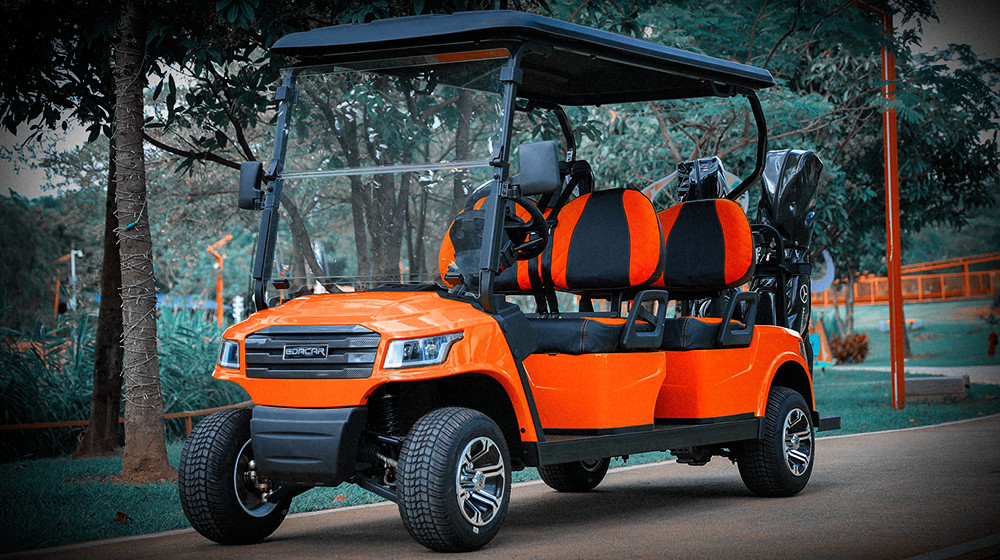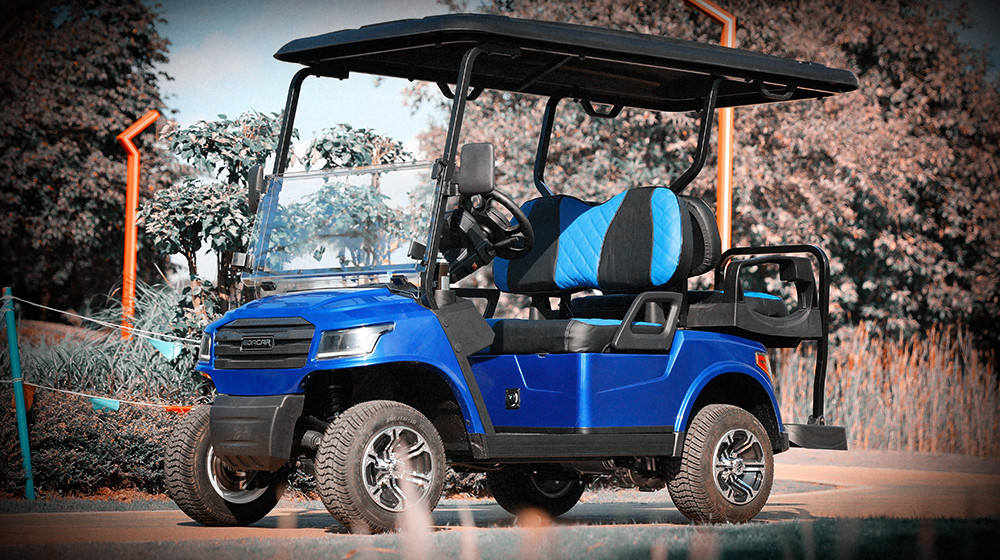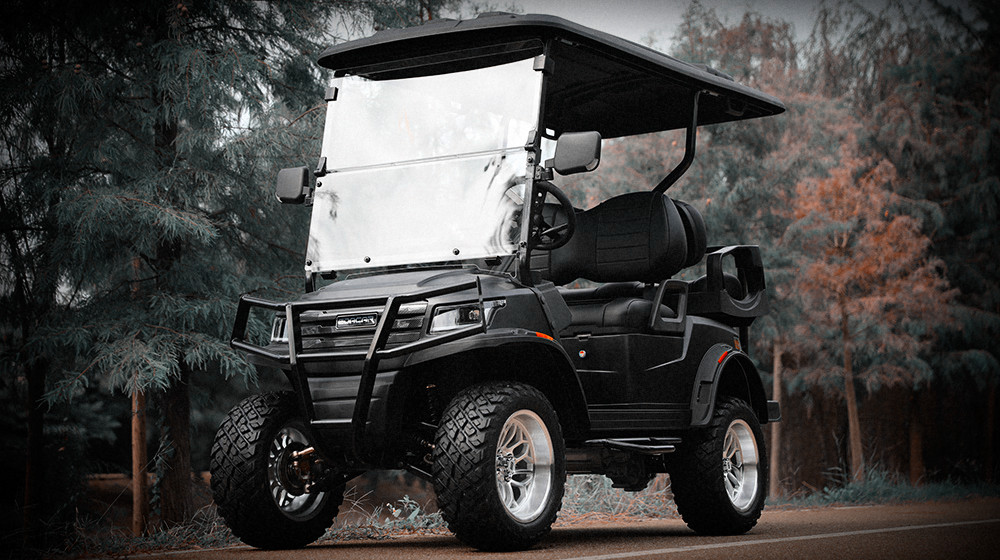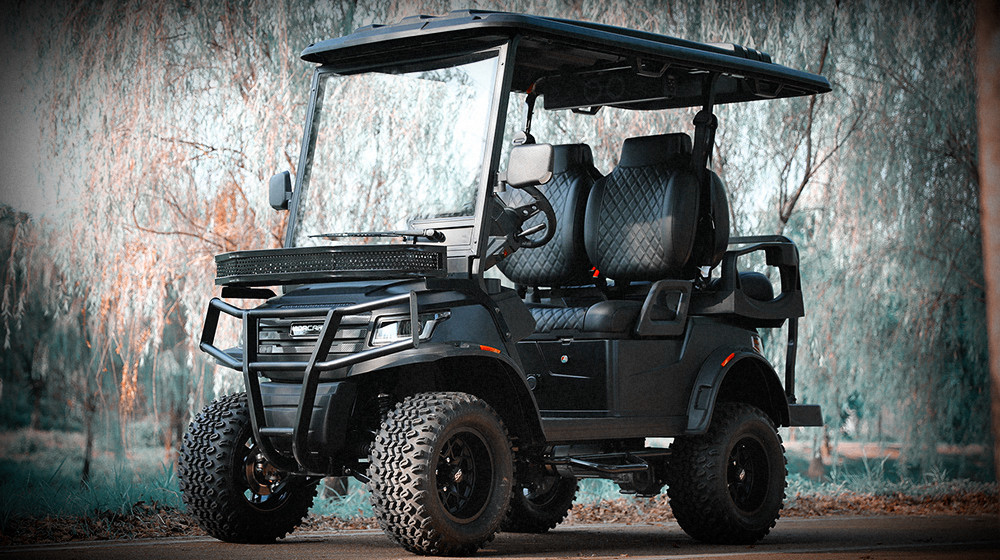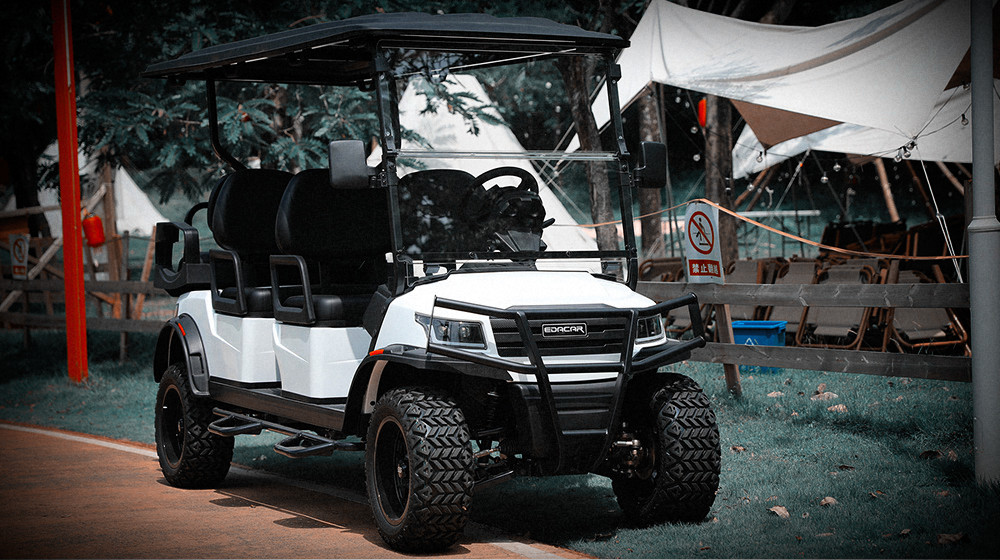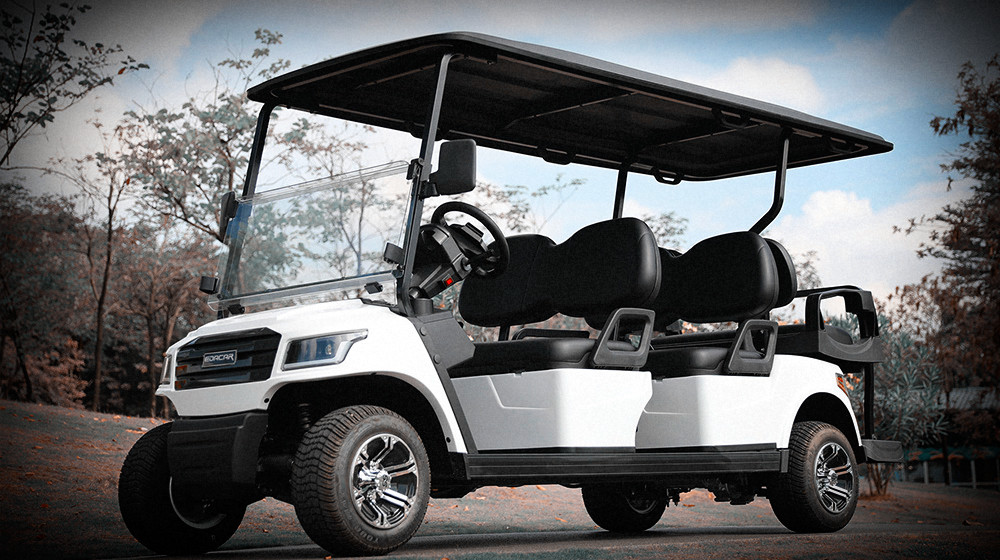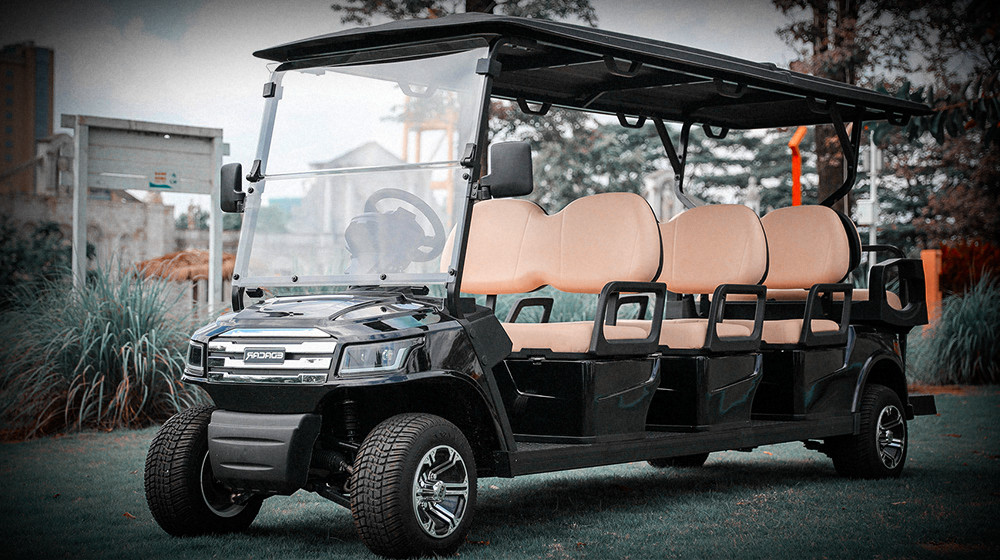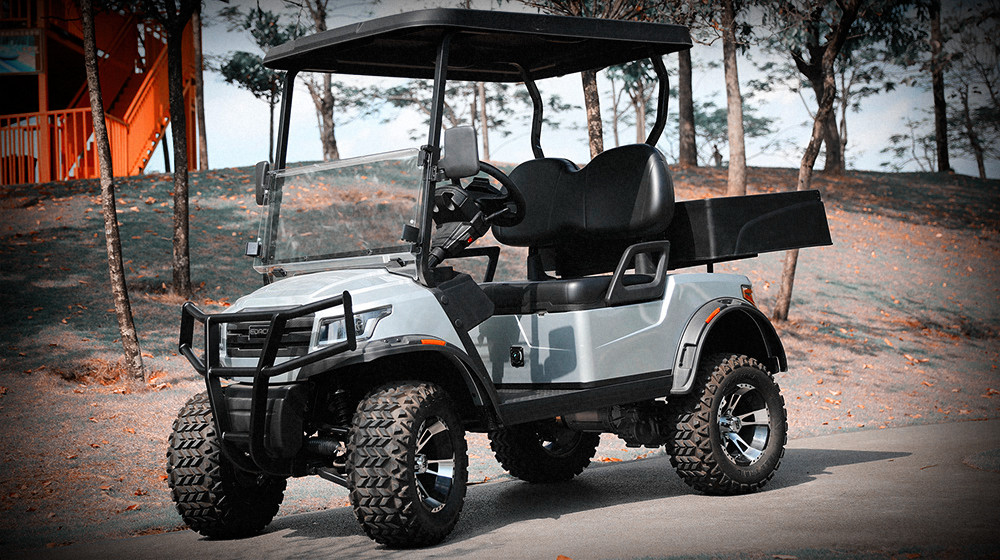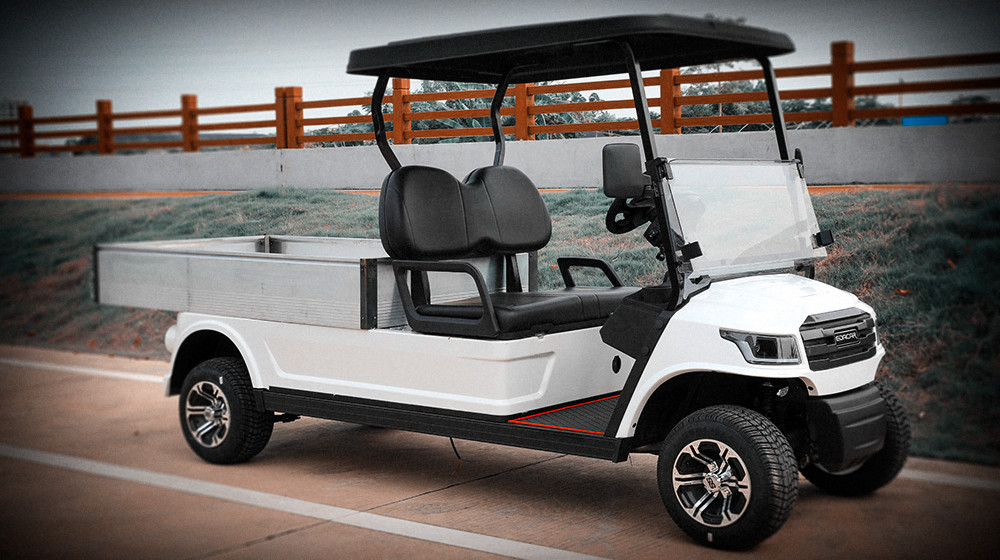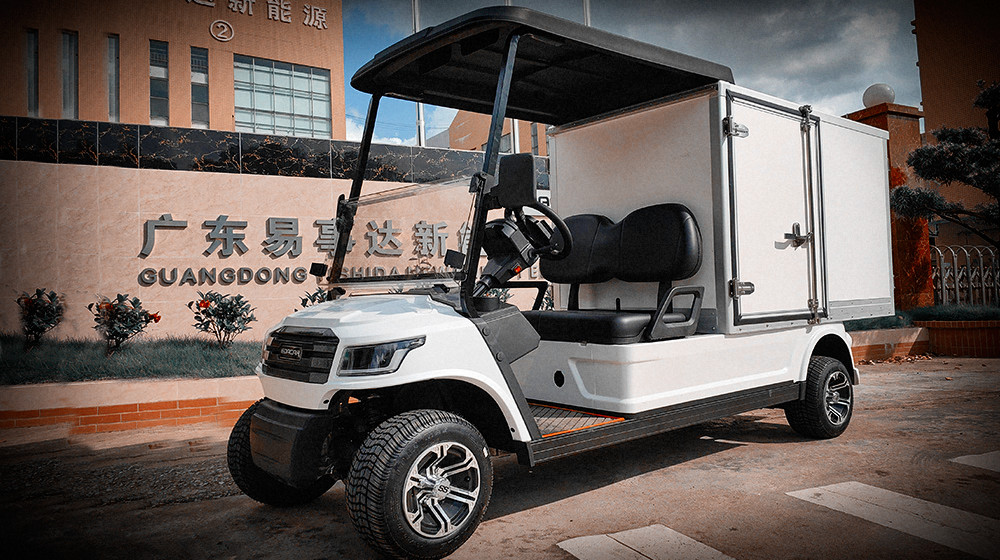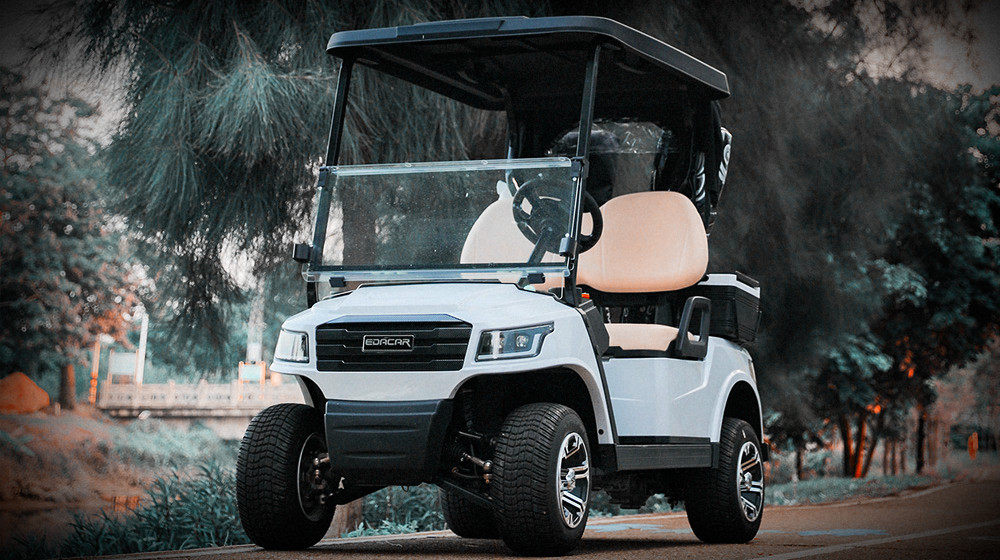
F2 MODEL
· 4KW AC MOTOR WITH EM BRAKE
· FOUR WHEEL DISC BRAKE
· LITHIUM POWERED

Vehicles
Experience the greens in a whole new way
Drive like a pro with our carts, Leave the walking to others.
When the good road ends, the great adventure begins.
We get you where you need to go, without a worry
Delivery you can count on. One Charge Can Go A Long Way.
Golf Cart Customization: Golf carts have evolved into versatile vehicles. These vehicles now cater to daily activities beyond just golfing. Through the art of customization, one can truly express individuality. More than aesthetics, customization ensures the achievement of optimized performance. For those seeking enhancements, options abound: from paint colors to lift kits, and even lithium battery upgrades. We provide an extensive range of components and add-ons. With their offerings, designing a personalized art becomes an exciting endeavor. As you navigate this world of customization, rest assured, we're here to guide you every step of the way.
Dealers
Support
Press
Contact
Let's face it, the world of electric vehicles is really moving fast, and if you're in the lithium ion (Li-ion) battery game, you know how crucial it is to stick to those global certification standards. With countries clamping down on regulations and really putting safety, reliability, and sustainability first, businesses have their work cut out for them when it comes to importing and exporting Li-ion battery products. That’s where we come in. EDACAR EV Co., Ltd. is not just your average player; we’re a national high-tech enterprise right in the thick of this exciting industry. We focus on innovating, researching, developing, and manufacturing electric vehicles powered by Li-ion batteries – think everything from golf carts to utility vehicles and even some off-road rides!
You can totally see our dedication to quality in our top-of-the-line assembly lines, which are packed with advanced robotics that make everything super precise and efficient. As Chinese manufacturers keep raising the bar with high-quality Li-ion batteries, getting a handle on those global certification standards is going to be essential if we want to make a mark in the international market.
You know, the whole scene around lithium-ion battery certification is changing pretty fast these days. With more and more people jumping on the electric vehicle (EV) bandwagon, it’s super important for manufacturers and import-export businesses to keep up with the latest certification benchmarks. Take Europe, for instance—it's a booming market! The sector for EV battery testing, inspection, and certification is expected to skyrocket from around $410.9 million in 2024 to a jaw-dropping $2.21 billion by 2030. That’s a huge jump and shows just how focused everyone is on battery safety and quality, mainly because of what regulations require and what consumers are looking for.
Now, over in China, they’re planning to roll out stricter battery standards in 2026, and trust me, that’s going to shake things up for the global electric vehicle scene. Since about half of the emissions in the transport sector come from light-duty vehicles, these new rules are really meant to cut down on environmental impact and keep folks safe. Basically, having solid certification processes in place is key for sparking innovation and pushing for high-quality battery production at scale. So, as manufacturers work their way through these international standards, staying compliant is essential if they want to stay competitive in a market that’s set to triple in size over the next ten years.
Alright, let’s chat about importing and exporting lithium-ion batteries. You really can’t underestimate the importance of having the right paperwork in place—it’s the key to making sure everything goes smoothly. So, first off, there’s the Material Safety Data Sheet, or MSDS for short. This document dives into all the nitty-gritty details about what’s actually in the battery, how to handle it, and what to do in an emergency. It’s super important because it keeps everyone in the loop about any possible hazards and helps them act quickly if something goes wrong.
Then, there’s the Declaration of Dangerous Goods. This one’s a biggie too! It lays out the classification and packing requirements, which is vital for following the rules set by international transport authorities. Trust me, you don’t want to mess that up!
And don’t forget the Certificate of Compliance. Basically, this little piece of paper proves that your batteries meet some serious international standards, like the UN regulations for hazardous materials. Customs folks usually ask for this certificate, and having it can really speed up the clearance process.
Lastly, it’s a good idea for both importers and exporters to know about any specific licenses they need for their regions. These permits are non-negotiable for moving goods across borders legally. So, by making sure all your documentation is spot on and complete, you can lower your risks and boost your chances of thriving in the competitive world of lithium-ion batteries.
If you're diving into the world of global trade for lithium-ion batteries, you really can’t overlook the need to comply with international regulations. Different countries have set up some pretty strict certification standards to make sure that battery products are safe and reliable. Trust me, importers and exporters really need to get familiar with these rules to dodge any nasty delays or potential legal headaches down the line. You’ll want to pay special attention to important standards like UN 38.3, which is all about transporting lithium batteries, and IEC 62133, which focuses on battery safety. Knowing the ins and outs of these guidelines can really help make the certification process smoother and get you into international markets quicker.
And here’s a tip: working with a compliance expert can be a game changer. These folks are up to speed with all the ever-changing regulations and can give you advice that's tailored just for your products and the markets you're eyeing. Plus, being proactive with compliance audits, keeping thorough documentation, and staying in touch with regulatory bodies can greatly improve your chances of making it through the maze of global battery trade without a hitch. By putting these strategies front and center, businesses can ensure their lithium-ion battery products hit top-notch safety standards while seizing those global trade opportunities!
This chart illustrates the number of required certifications for Li-ion batteries across different regions, highlighting the importance of compliance with international regulations to ensure successful import and export operations.
So, when you’re shipping lithium-ion batteries, you really need to pay attention to the labeling requirements. Seriously, it’s super important for both safety and compliance. Every country has its own set of rules for how these batteries should be dealt with—packaged, marked, and labeled. In the U.S., for example, the Department of Transportation and the International Air Transport Association have laid down some pretty clear guidelines. They focus not just on general hazardous materials labels, but also on those specific lithium battery markings. This stuff helps everyone involved in handling the shipments to be aware of the possible risks that come with lithium-ion batteries.
But you know, labeling isn’t just about following the rules; it’s really crucial for keeping things safe during transport. You’ve got to make sure the labels clearly state the battery type, its capacity, and if it requires any special handling. For example, the UN 3480 and UN 3481 labels are well-known and absolutely necessary when you’re flying these batteries around. By sticking to these labeling requirements, companies can breeze through customs, lower the chances of accidents, and just make the whole shipment process safer overall. In the end, that leads to smoother sailing in international trade.
| Country | Regulatory Body | Certification Standard | Labeling Requirements | Testing Methods |
|---|---|---|---|---|
| United States | DOT | 49 CFR Part 173 | UN3480/UN3481 labels, warning symbols | UN Test Series |
| European Union | UN/ECE | ADR/RID | Battery Symbol, Recycling Information | IEC 62133 |
| China | Standardization Administration of China (SAC) | GB 31241-2014 | Product Model, Manufacturer, Warnings | GB/T 18287 |
| Japan | Ministry of Land, Infrastructure, Transport and Tourism | JIS C 8715 | Transport Mark, Hazardous Materials Label | JIS Z 8101 |
| Australia | Australian Dangerous Goods Code (ADGC) | ADG Code | DG Labels, Handling Precautions | AS/NZS 3100 |
Dealing with the ins and outs of lithium-ion battery trading can be a real headache, especially for companies like EDACAR EV Co., Ltd. that focus on cutting-edge electric vehicles. It’s so easy to trip up on things like global certification standards—they can be really confusing and you might end up with delays and compliance issues that’ll cost you big time. So, making sure your products tick all the boxes for each market? Super important if you want your imports and exports to go off without a hitch.
First tip: Before you dive into trading, definitely check out the specific certification requirements of the markets you’re targeting. You’ve got to get a handle on the standards from organizations like IEC and UL, and remember, they can change quite a bit from one region to another.
Another common stumbling block is messing up labeling and documentation. A lot of companies end up overlooking just how crucial accurate info on battery specs and safety protocols is. If you get that wrong, you might find your shipments getting turned away, which can really hurt your reputation.
So, for tip number two: it’s worth your time to invest in training your team on international trade regulations and proper labeling practices. Totally helps you steer clear of those costly missteps.
Focusing on these usual pitfalls will help companies navigate the tricky waters of lithium-ion battery import and export, giving them a better shot at success.
If you're in the business of importing or exporting lithium-ion batteries, then getting the hang of how certification bodies work is super important. You really want to understand what they expect from you because that can make getting certified way easier and help you enter the market faster. One good way to start is by really digging into the regulations in the markets you’re targeting. Make sure you're getting familiar with the standards put forth by organizations like the International Electrotechnical Commission (IEC) and Underwriters Laboratories (UL). Trust me, these can differ a lot depending on where you are.
Another tip? Keep those communication lines open with the certification bodies! Having a chat with them early on can help clear up what they expect, steer you away from any mix-ups, and give you a heads up on the paperwork and testing you’ll need to tackle. Oh, and don’t hesitate to reach out to third-party consultants who know this certification stuff inside out. They can offer some really handy insights and help you navigate all those tricky regulations, which boosts your chances of getting certified successfully and getting into the market on time.
In the pursuit of elevating your golf game, the right equipment can make a substantial difference. The GOLF CART SERIES-Siera 2 model stands out in this regard, thanks to its advanced lithium battery technology that redefines performance standards on the course. Recent reports indicate that lithium batteries offer a remarkable 50% more energy density compared to traditional lead-acid batteries, translating into longer run times and faster charging cycles. This means players can enjoy extended rounds without the anxiety of running out of power, allowing for uninterrupted focus on their game.
Moreover, the GOLF CART SERIES-Siera 2 prioritizes both speed and efficiency. With a peak output that can reach up to 8 horsepower, players can experience smooth acceleration and powerful hill climbing without straining the battery life. The enhanced capacity of lithium batteries not only supports a robust performance but also contributes to the overall lifespan of the golf cart. According to the Battery University, lithium batteries can last up to four times longer than their lead-acid counterparts, providing a long-term investment that pays off in performance and reliability on the greens.
Additionally, the integration of advanced technology in the Siera 2 model maximizes user experience. Features such as regenerative braking systems enhance battery efficiency and assist in managing energy consumption effectively. Golfers utilizing this advanced equipment can observe not only improved game performance but also a reduced environmental impact, with manufacturers increasingly focusing on sustainability within the golf cart industry. The GOLF CART SERIES-Siera 2 exemplifies how technological innovation can elevate not just performance but also the overall golfing experience.
: Compliance is crucial because it ensures the safety and reliability of lithium-ion battery products, helps avoid costly delays, and mitigates potential legal issues in global trade.
Key regulations include UN 38.3, which governs the transport of lithium batteries, and IEC 62133, which focuses on battery safety.
Businesses can enhance their chances by engaging with compliance experts, conducting compliance audits, maintaining thorough documentation, and communicating proactively with regulatory bodies.
Compliance experts provide up-to-date knowledge on evolving regulations and tailor advice specific to your products and target markets, which can facilitate smoother certification processes.
Effective engagement can be achieved by conducting a thorough analysis of the regulatory landscape in target markets and establishing open communication channels with certification bodies.
Understanding the standards from these organizations is essential as they can vary significantly across regions, impacting the certification process and market access.
Third-party consultants specialize in certification processes and can provide valuable insights, helping businesses navigate complex regulatory frameworks for successful certification.
Proactive communication clarifies expectations, helps avoid misunderstandings, and provides guidance on necessary documentation and testing procedures, streamlining the certification process.
Having thorough documentation helps ensure compliance with international regulations, facilitates smoother interactions with certification bodies, and can expedite the certification process.
Businesses can implement strategies such as analyzing the regulatory landscape, establishing open communication with certification bodies, and leveraging third-party expertise to improve certification outcomes.