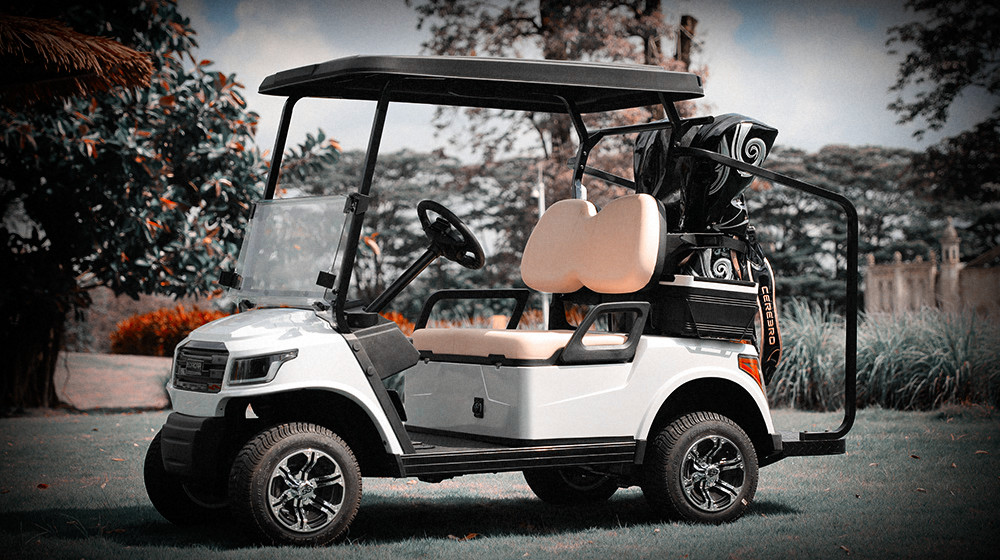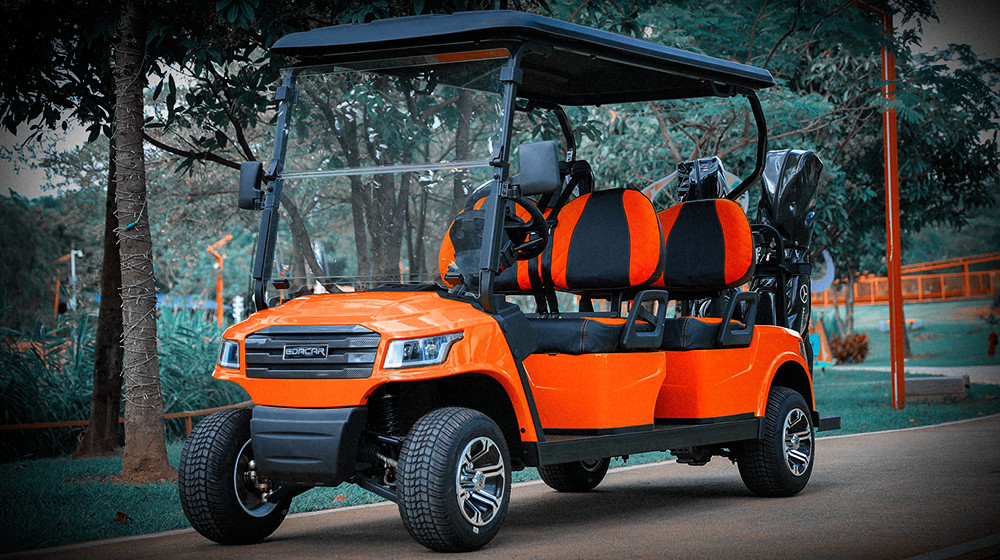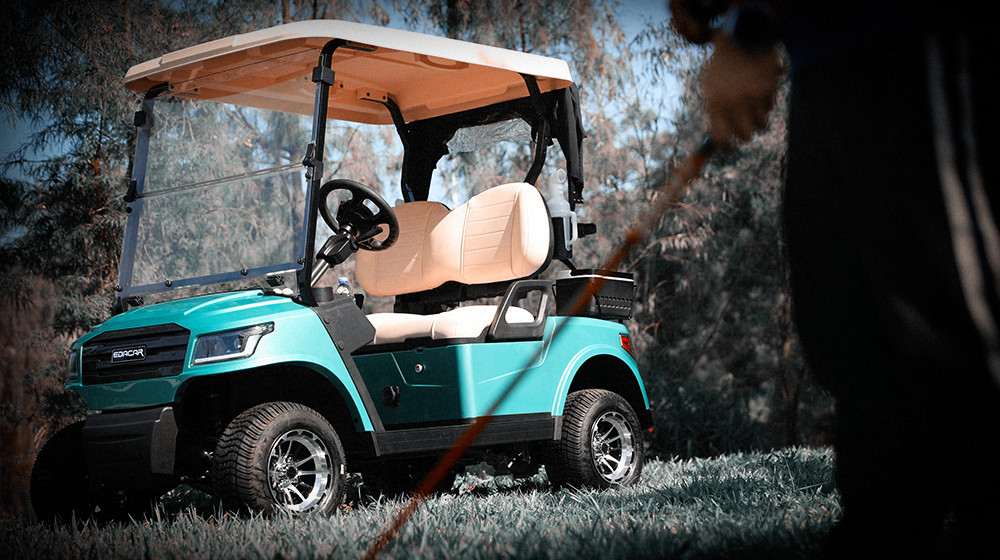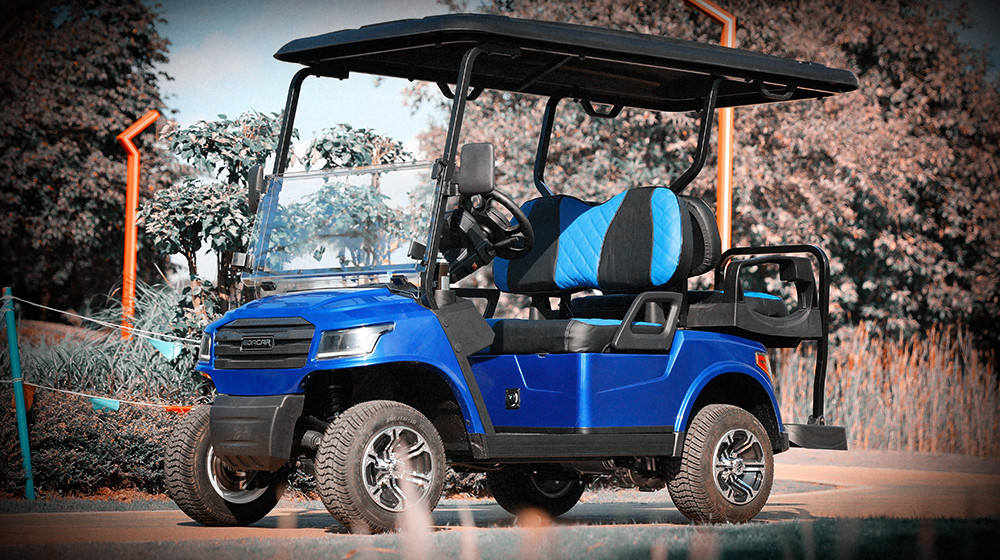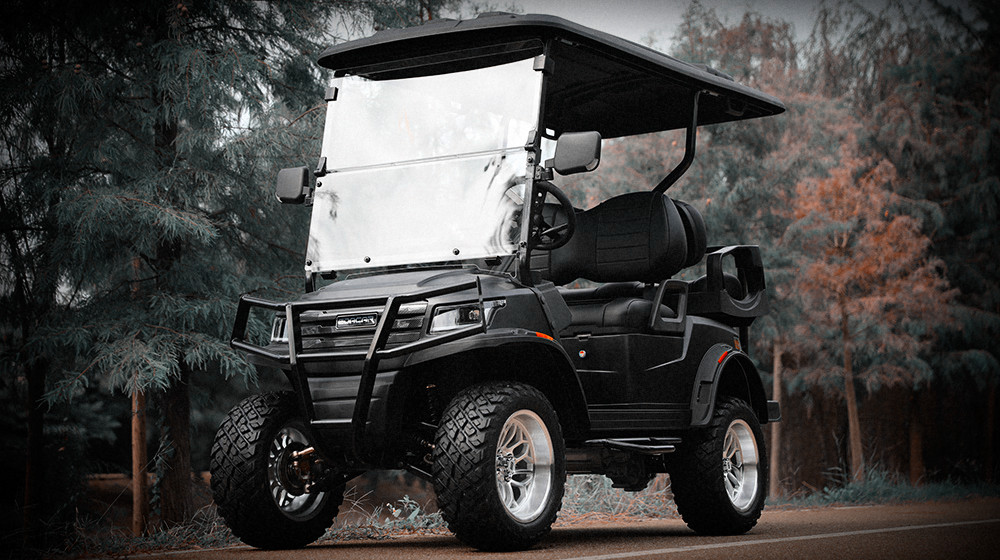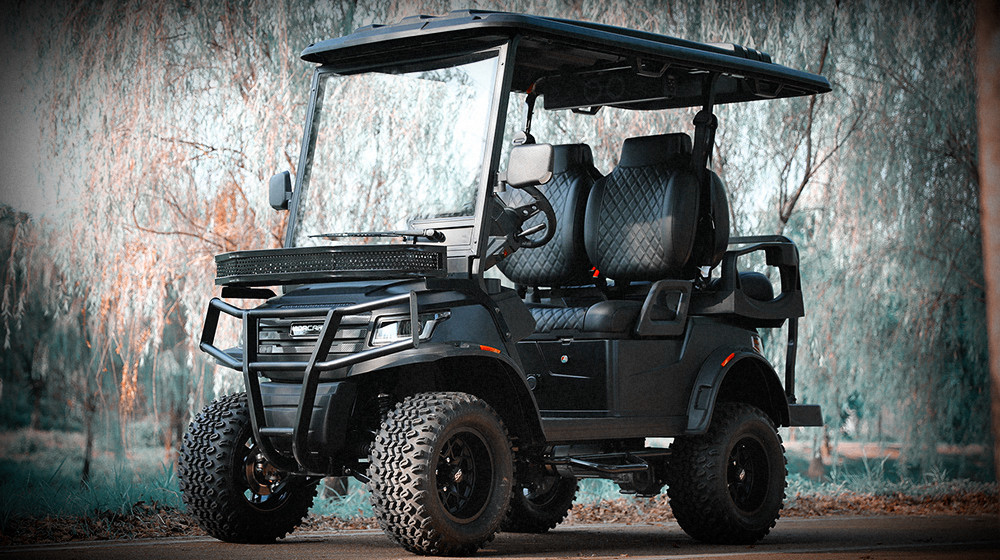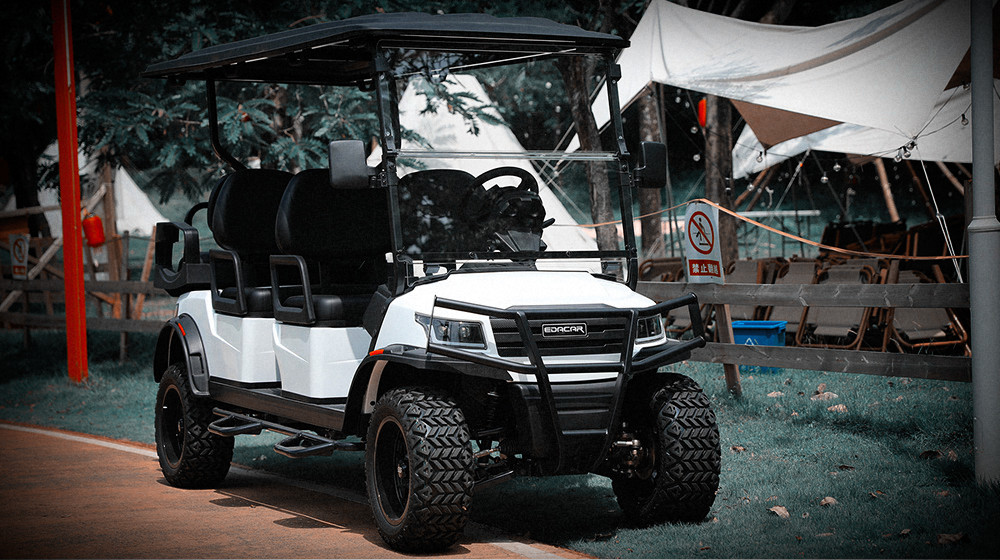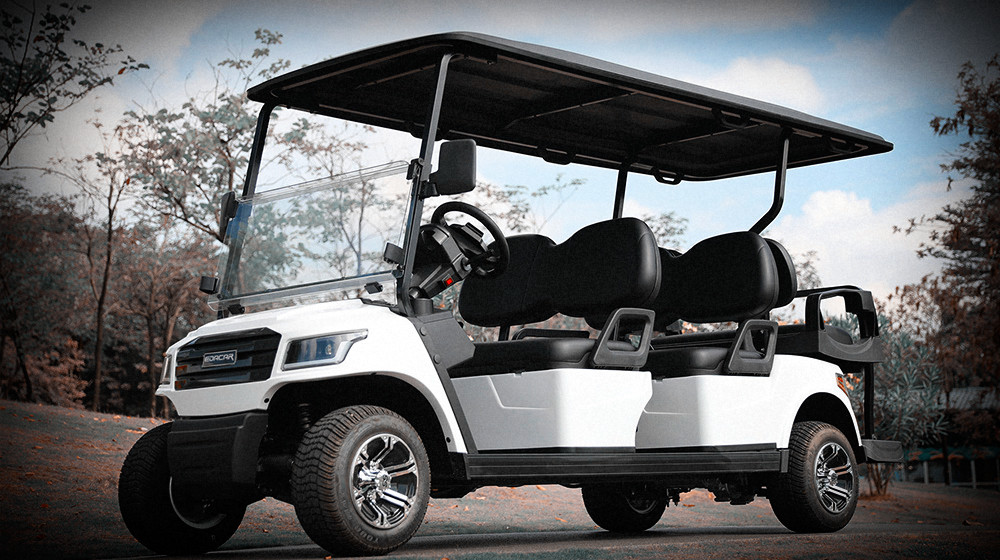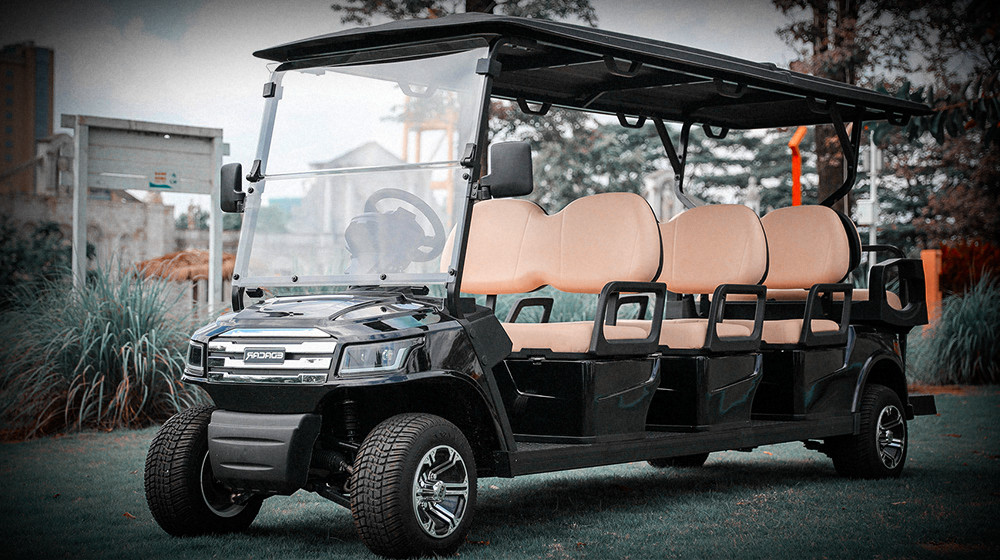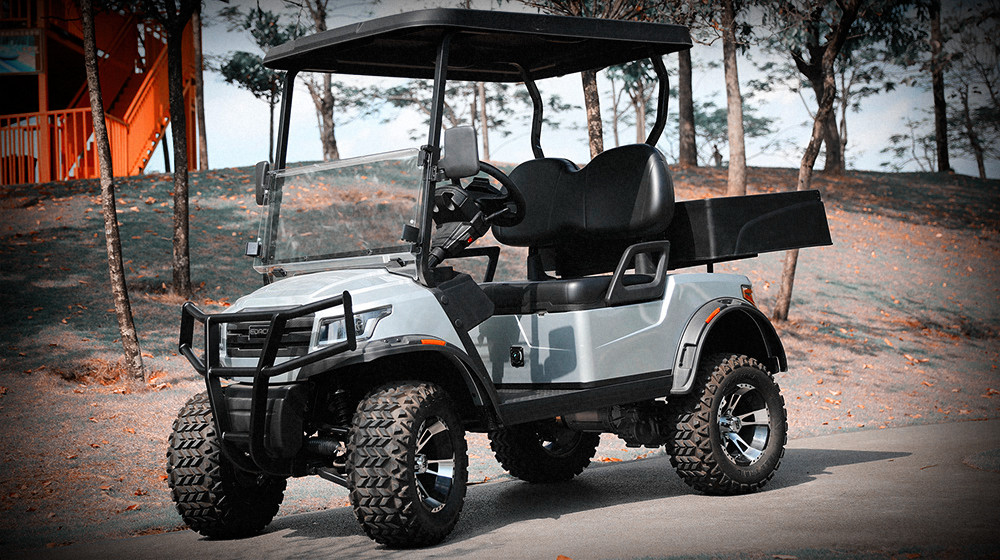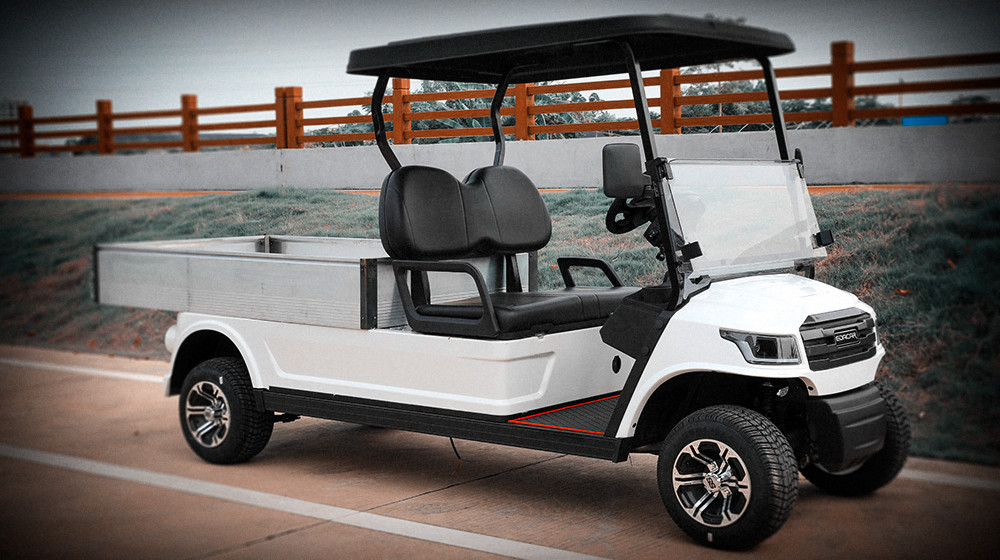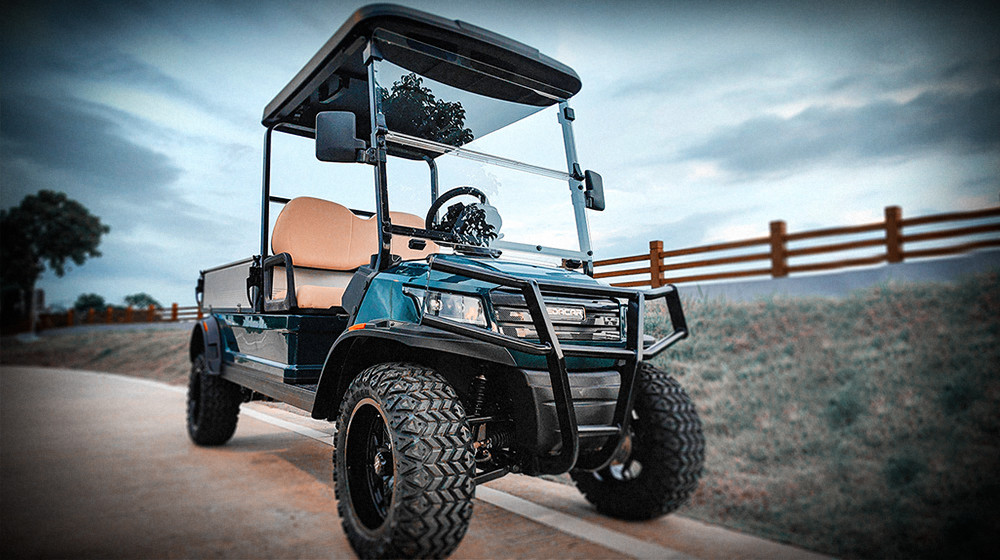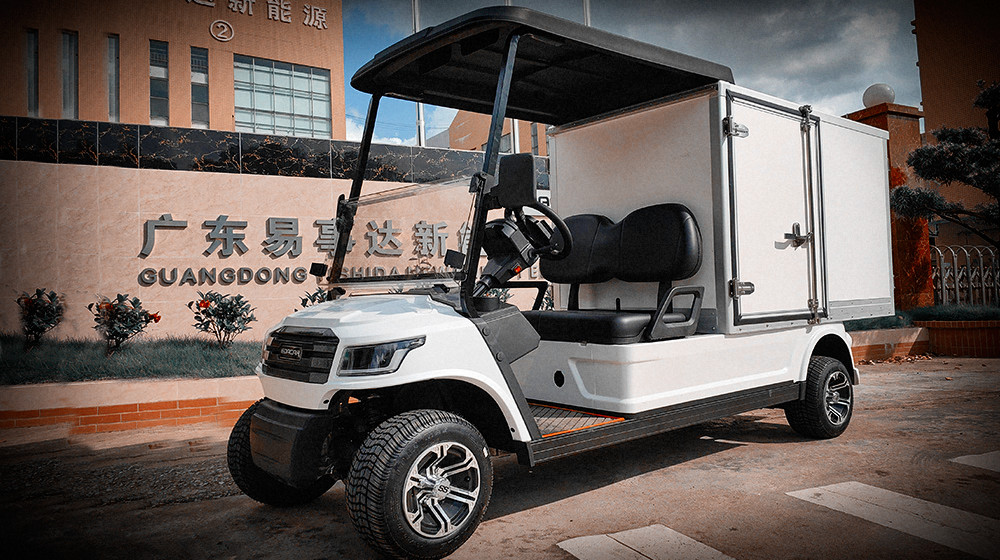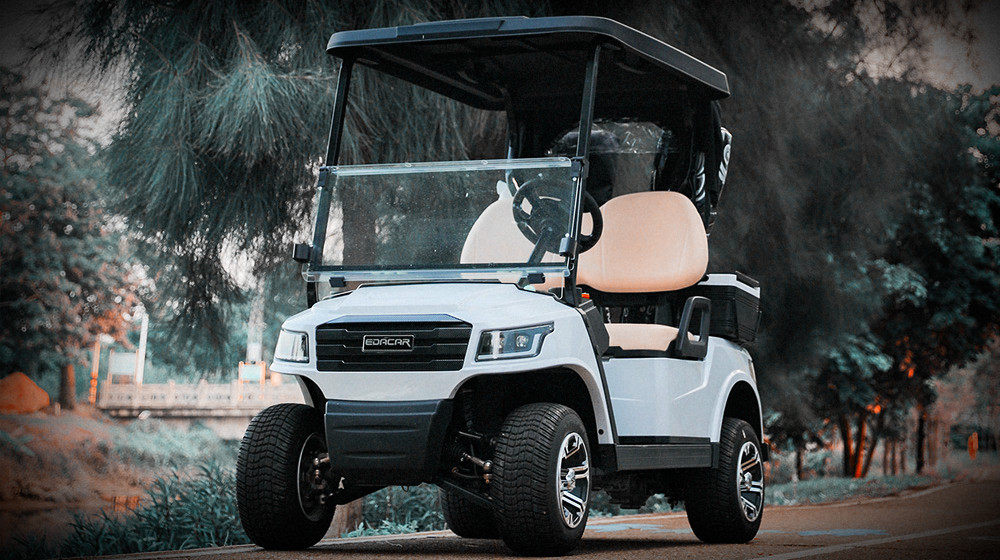
F2 MODEL
· 4KW AC MOTOR WITH EM BRAKE
· FOUR WHEEL DISC BRAKE
· LITHIUM POWERED

 Vehicles
Experience the greens in a whole new way
Drive like a pro with our carts, Leave the walking to others.
When the good road ends, the great adventure begins.
We get you where you need to go, without a worry
Delivery you can count on. One Charge Can Go A Long Way.
Golf Cart Customization: Golf carts have evolved into versatile vehicles. These vehicles now cater to daily activities beyond just golfing. Through the art of customization, one can truly express individuality. More than aesthetics, customization ensures the achievement of optimized performance. For those seeking enhancements, options abound: from paint colors to lift kits, and even lithium battery upgrades. We provide an extensive range of components and add-ons. With their offerings, designing a personalized art becomes an exciting endeavor. As you navigate this world of customization, rest assured, we're here to guide you every step of the way.
Dealers
Support
Press
Contact
As more folks look for sustainable and efficient ways to get around, improving Lithium Ion Battery tech is more important than ever. Here at EDACAR EV Co., Ltd., we're proud to be a high-tech company leading the charge. Our main focus is on researching, building, and selling electric vehicles powered by lithium batteries—think golf carts and off-road vehicles. We've got some pretty cool assembly lines with 11 modern robots that help us make our batteries better and more reliable, which is a big deal for the future of electric utility vehicles. In this blog, I want to share some exciting ideas on how we can make Lithium Ion Batteries even more efficient. We'll look at some of the biggest challenges and toss around strategies to unlock their full potential in different applications. Come along with us as we work towards more eco-friendly and better-performing mobility solutions!

You know, everyone’s really focused right now on boosting how well lithium-ion batteries work—especially in the electric vehicle world. And honestly, new materials are a big part of this push. Recent research shows that by using advanced anode and cathode stuff, we can boost energy density by up to 30%. That’s a pretty big deal because it means batteries last longer and perform better. For example, switching to silicon-based anodes has bumped up charge capacity from about 372 mAh/g to over 1000 mAh/g—that’s like a huge jump forward for battery tech.
At EDACAR EV Co., Ltd., we totally get how important these breakthroughs are. That's why we’re working hard to create the latest in lithium-powered electric vehicles—whether it’s golf carts or bigger utility vehicles. Our factories are packed with high-tech robotic systems that help us build everything with great precision, so our batteries are super reliable and efficient. Industry insiders suggest that by improving our battery materials, we can cut costs by up to 20% while also giving performance a nice boost. That’s why staying ahead in R&D is so critical for us. With all these innovative materials, we’re aiming to deliver top-notch products that meet the growing need for sustainable electric transport—and honestly, we’re excited about what’s coming next.
The advancements in lithium battery technology have significantly transformed the golf industry, particularly in the efficiency and performance of golf carts. Recent industry reports indicate that lithium batteries can provide up to 5 times the lifespan of traditional lead-acid batteries, boasting more than 2,000 cycles of charge and discharge. This improvement not only reduces the overall cost of ownership for golf courses and players but also enhances the convenience of game play. Golfers can now enjoy uninterrupted rounds without the anxiety of battery depletion, allowing them to maximize their golf experience.
Moreover, the rapid charging capabilities of lithium batteries, which can reach full charge in just 2-4 hours, enable quicker turnarounds for golf carts during busy weekends and tournaments. As highlighted in a recent Golf Course Industry report, courses adopting lithium battery solutions reported a 20% increase in cart rental revenue due to enhanced availability and performance. This transition supports sustainability in the sport as well, with lithium batteries being lighter and more environmentally friendly than their lead-acid counterparts, promoting greener practices in golf.
Investing in lithium battery-powered golf carts not only elevates the golfing experience but also resonates with the growing demand for sustainable and high-performance solutions in the outdoor leisure industry. Industry professionals recommend brands that utilize cutting-edge battery technology to ensure optimal performance and longevity, further empowering golfers to improve their game on the course.
: Electrolyte optimization enhances ionic conductivity, reduces internal resistance, and enables faster charge and discharge rates, improving the efficiency of lithium-ion batteries.
These innovative electrolytes minimize resistance at the electrode-electrolyte interface, provide enhanced stability and safety, and support a broader operating temperature range.
Improved electrolyte technology leads to higher energy densities, longer cycle life, and batteries that charge quicker and last longer.
With the rising demand for lithium-ion batteries, sustainable recycling practices are crucial for minimizing waste and recovering valuable components like lithium and cobalt.
Innovations in hydrometallurgical and pyrometallurgical processes are improving material recovery efficiency while using less energy and generating fewer pollutants.
A closed-loop system ensures that battery materials are reclaimed and reused multiple times, reducing the need for virgin resources and contributing to a circular economy.
Collaborations between manufacturers, recycling companies, and research institutions enable knowledge sharing and technological advancements, leading to more effective recycling strategies.
Sustainable recycling practices reduce environmental impact and resource depletion by reintegrating valuable materials back into the production cycle.
These advancements support a circular economy, minimizing waste and promoting the responsible use of resources in line with global sustainability objectives.
The future of lithium-ion batteries looks promising with continued innovations in electrolyte technology and sustainable recycling practices, paving the way for cleaner energy solutions.
When it comes to electric vehicles—especially the ones we build here at EDACAR EV Co., Ltd.—finding innovative ways to boost lithium-ion battery performance is a total game-changer. We're genuinely passionate about pushing the boundaries, which is why we're always exploring new materials that can extend battery life and improve how they perform, all through advanced chemistry techniques. Plus, by weaving in smart algorithms and AI, we can predict maintenance needs before anything even goes wrong, keeping our vehicles running smoothly and efficiently over the long haul.
On top of that, fine-tuning the electrolyte helps cut down resistance and lets batteries charge faster, while smart thermal management systems are key to preventing overheating and making sure our batteries last longer. And since sustainability is at the heart of what we do, we’re also investing in recycling tech to recover and reuse battery materials responsibly—because taking care of the planet matters to us. Oh, and we know fast and reliable charging infrastructure makes all the difference, so we're working on expanding that its reach.
All these efforts add up to maximize the potential of lithium-ion batteries, especially in our sleek electric golf carts and utility vehicles. At the end of the day, it’s all about creating better, smarter, and more sustainable electric rides for everyone.